The Real Benefits of Data Warehousing for Retail Businesses
Are you still wrestling with spreadsheets and siloed reports? Retailers who treat data as a by product leave real value on the table. A modern data warehouse transforms scattered data into clear insights. It drives faster decisions, boosts revenue, cuts costs and improves customer experience. In this article we will dive straight into the hard benefits retail businesses gain from data warehousing. No fluff. No jargon. Just concrete wins you can expect in the first year.
By the end you will know:
Why data warehousing matters in retail
The top ten benefits that move the needle fast
Five proven use cases with real gains
How to overcome common hurdles
A simple roadmap to get started today
The Data Challenge in Retail
Retailers collect mountains of data from point of sale systems, e-commerce, loyalty programs, supply chain logs and social media. Yet many still export CSV files into slides and pray for insights.
This old way costs real money:
Stock imbalances lead to lost sales or heavy discounting
Wasted marketing spend on untargeted campaigns
Manual reporting that eats hundreds of staff hours each month
Slow decisions that let opportunities slip away
Imagine cutting inventory carrying costs by ten per cent or boosting average order value by five per cent through smarter offers. That is the power data warehousing delivers.
What Is Data Warehousing?
A data warehouse is a central hub that brings together data from all your systems into one consistent format. Key features include:
Unified data model so sales, stock, supplier and customer records all speak the same language
Historical archive for analysing trends over weeks, months and years
Optimised performance so complex reports run in seconds without slowing down your live systems
In retail this means you can ask questions like “Which product bundles drove the biggest lift during last quarter’s sale?” and get answers in seconds.
Top Ten Benefits at a Glance
Below are the ten biggest benefits retail teams see after rolling out a data warehouse.
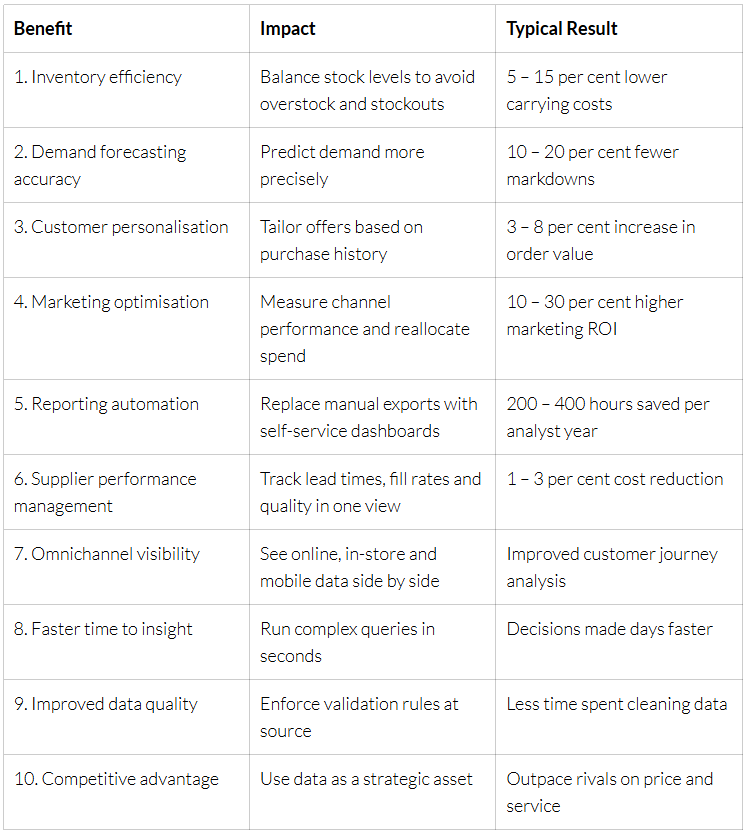
1 Inventory Efficiency
A national apparel chain linked point-of-sale data with supplier lead times in their warehouse. They cut excess stock by twelve per cent and avoided out of stock events, saving two million dollars in carrying costs in year one.
2 Demand Forecasting Accuracy
An electronics retailer fed historical sales, promotion calendars and weather data into their warehouse. Forecast accuracy jumped from sixty five per cent to eighty five per cent. Markdown spending fell by 1.2 million dollars.
3 Customer Personalisation
A supermarket chain grouped customers by shopping patterns. They ran targeted email and SMS offers through a warehouse powered marketing database. This lifted average order value by six per cent and added eight hundred thousand dollars in annual revenue.
4 Marketing Optimisation
A fashion retailer integrated Google, Facebook and affiliate data into their warehouse. They spotted underperforming channels and shifted three hundred thousand dollars in ad spend to high performing campaigns. The result was an extra four hundred fifty thousand dollars in revenue.
5 Reporting Automation
A homewares business replaced a team of three analysts who spent four hundred hours per month on manual reports. Self service dashboards let managers run new analyses in minutes. They redeployed staff to high value tasks adding one hundred twenty thousand dollars in strategic value.
Five Proven Retail Use Cases
Here are five real world use cases where data warehousing drives fast and measurable benefits.
Omnichannel Analytics
Combine in-store, online and mobile data
Map the full customer journey from first touch to repeat purchase
Close gaps in service and improve conversion rates
Price and Promotion Analysis
Link competitor price feeds with your sales data
Test price points in select stores or customer segments
Automate dynamic pricing rules to protect margin
Supplier Performance Tracking
Monitor fill rates, lead times and order accuracy
Flag late or incorrect shipments before they hit shelves
Use insights to negotiate better terms
Product Affinity and Cross-sell
Mine transaction logs for product pairings
Power recommendation engines online and in store
Raise attach rates and basket size
Customer Lifetime Value Modelling
Blend loyalty data, demographics and purchase behaviour
Segment customers by predicted lifetime value
Allocate marketing and service resources to top segments
Each of these use cases pays back quickly and builds momentum for more advanced analytics down the track.
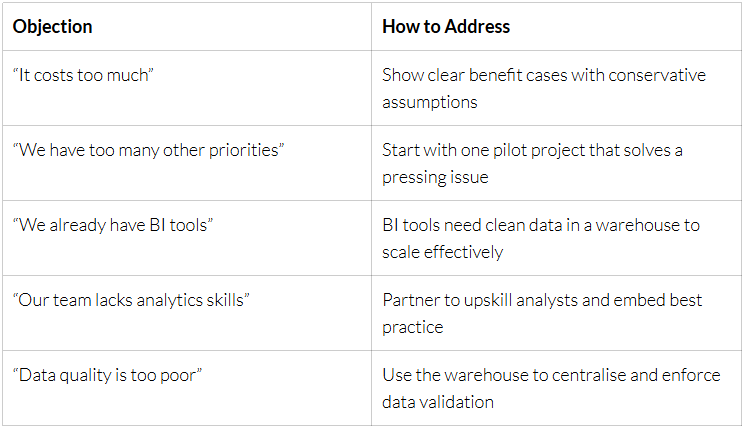
Overcoming Common Hurdles
Even small teams can succeed if they tackle these five hurdles head on.
Provocative thought
If you treat data warehousing as optional, your competitors will steal market share. Data done right is a core asset, not a luxury.
How to Get Started: A Five Step Roadmap
Follow this roadmap to kick off your data warehousing journey with confidence.
Clarify Business Goals
Pick one or two high value use cases such as inventory efficiency or customer personalisation
Assess Data Sources
List all key systems, spreadsheets and external feeds
Identify quick wins around existing clean data
Select Your Platform
Evaluate cloud native options for cost, scalability and integration
Snowflake, Big Query and Azure Synapse are popular choices
Build ETL Pipelines and Models
Start simple: sales, stock and customer tables first
Adopt a dimensional model with fact and dimension tables
Deploy Dashboards and Train Teams
Launch self-service reporting for frontline teams
Run workshops to foster data driven decision making
Tip
Treat deployment as iterative. Collect feedback, refine data models and roll out new features in sprints.
Measuring Success
To track progress focus on these key metrics:
Inventory days on hand
Percentage of stockouts
Average order value
Marketing return on ad spend
Time to generate key reports
Data quality scores
Set baseline values then review monthly. You will see benefits stack up fast.
Conclusion
Data warehousing is no longer just for large chains. Cloud based platforms and pay as you go pricing mean even small to medium retailers can unlock big benefits in the first year.
From sharper forecasts and leaner inventory to personalised offers and faster insights, the real benefits speak for themselves. The real question is not whether you can afford to build a data warehouse. It is whether you can afford not to.
Ready to capture these benefits in your retail business? Contact Pentify Insights for a tailored data warehouse roadmap and start turning your data into profit today.